Healing the Broken: The Church’s Response to Addiction and Relapse

Addiction is not just a physical struggle—it’s an emotional and spiritual battle that leaves countless individuals feeling lost, ashamed, and isolated. While society often meets addiction and relapse with judgment or indifference, the Christian Church is called to respond differently: with grace, compassion, and hope. In communities of faith, healing begins not with condemnation, but with an invitation to restoration.

The Bible is filled with stories of broken people made whole by the love of God. Whether it’s the woman caught in adultery, the prodigal son, or Peter after denying Christ, Scripture is clear: failure is not the end of the story. Addiction and relapse, though deeply painful, are not disqualifiers from grace—they are opportunities for the Church to reflect the heart of Christ in action.

A Ministry of Presence and Compassion

The first step in the Church’s response is creating a safe and compassionate environment where people struggling with addiction feel seen and supported. Far too often, shame keeps individuals from reaching out. But when the Church embraces people without judgment and offers genuine care, it opens the door to healing.

Christ’s ministry was centered on those the world had cast aside—the sick, the sinful, the outcast. The Church must follow this model, recognizing that those battling addiction are not problems to be fixed but people to be loved.

Programs That Support Recovery

Many churches have launched faith-based recovery programs such as Celebrate Recovery, The Most Excellent Way, or support groups tailored to addiction and relapse prevention. These ministries combine biblical teaching, testimony, accountability, and community—offering a holistic approach that addresses the physical, emotional, and spiritual aspects of recovery.

In these groups, individuals find not just help, but hope. They discover they are not alone, and they receive tools to rebuild their lives with Christ at the center.

Addressing Relapse with Grace, Not Guilt

Relapse can be one of the most discouraging parts of recovery. It’s often accompanied by deep guilt, feelings of failure, and fear of rejection. The Church’s response here is critical. Rather than turning away, the Church must lean in—with open arms and a message that God’s mercy doesn’t run out.

Galatians 6:1 reminds us, “If someone is caught in a sin, you who live by the Spirit should restore that person gently.” This doesn’t mean ignoring the reality of relapse—but it does mean responding with compassion, truth, and a commitment to walk with the person through their continued healing.

A Community of Hope

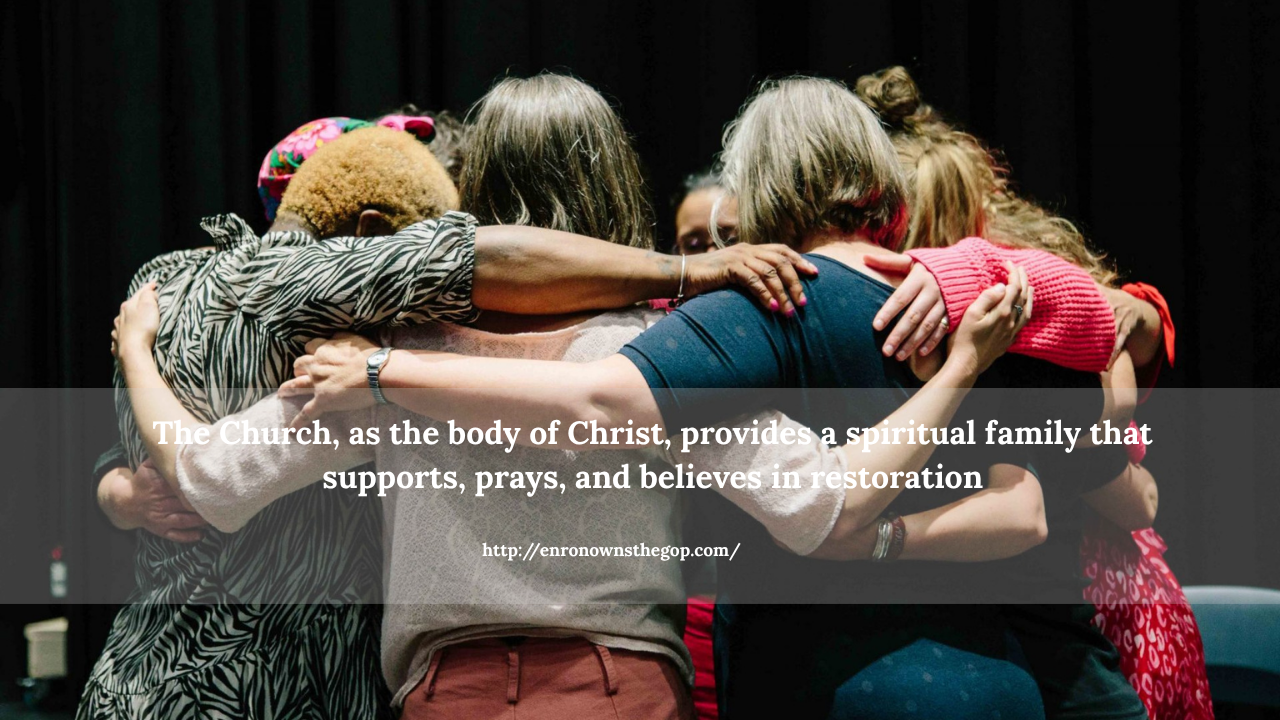
Addiction isolates, but recovery flourishes in community. The Church, as the body of Christ, provides a spiritual family that supports, prays, and believes in restoration. Through mentoring, small groups, counseling, and pastoral care, churches can be places where lives are rebuilt and hearts are healed.


Ultimately, the Church is not a museum for the perfect but a hospital for the broken. By offering grace over shame, presence over judgment, and hope over despair, the Church becomes a powerful force in healing the wounds of addiction and helping people rise—again and again—into the fullness of life God has for them.


Addiction and Redemption: A Christian Perspective on Substance Abuse Recovery

Addiction isn’t simply a physical dependency—it’s often rooted in spiritual and emotional brokenness. From a Christian standpoint, substance abuse reflects deeper issues: isolation, shame, and a longing for redemption. Yet the Gospel offers hope: a path not only to sobriety but to spiritual renewal and transformation.

Acknowledging the Need for Redemption

At the heart of Christianity is the belief that all are made in the image of God and endowed with intrinsic worth. Addiction, therefore, isn’t a mark of failure but a cry from a wounded soul seeking restoration Reddit+11impact.vision+11Daily Christian Blog+11. Scripture emphasizes that those struggling can find forgiveness and renewal: “If we confess our sins, He is faithful and just to forgive us” (1 John 1:9) .

Key Components of a Christian Recovery Approach

Christian recovery integrates spiritual principles with practical healing tools:

  • Dependence on Christ: Philippians 4:13 expresses reliance on God’s strength. Individuals are encouraged to surrender control and lean into God’s transformative power Reddit+3Daily Christian Blog+3liferenewal.us+3.

  • Confession and Repentance: Confession invites vulnerability and healing; repentance signals a genuine decision to change direction New Horizon Drug Rehab+15CrossTalk+15Answered Faith+15.

  • Community Support: Recovery is strengthened in fellowship. Christian communities bear one another’s burdens, encourage accountability, and combat spiritual isolation Reddit+12CrossTalk+12CrossTalk+12.

  • Scripture and Prayer: Engaging daily in Scripture and prayer fosters spiritual resilience. Passages like Romans 12:2 and Psalm 34:17–18 offer comfort and new mindsets Reddit.

  • Professional Help: Christian recovery models support the integration of faith with therapy, such as Christian counseling or medical care, recognizing both spiritual and psychological needs Wikipedia+15CrossTalk+15CrossTalk+15.

  • Service and Purpose: Ministry and service help recovering individuals discover renewed identity and purpose, reinforcing a commitment to ongoing transformation Beaumont Enterprise+15CrossTalk+15CrossTalk+15.

Biblical Themes of Redemption

Stories like King David exemplify how fall into sin—rather than final defeat—can lead to deep restoration through repentance. His cry in Psalm 51:10–12 embodies a plea for a renewed heart and spirit amidst brokenness Answered Faith. The narrative emphasizes that redemption is not just possible—it’s central to God’s character.

Community and Accountability

Christian recovery embraces the principles of confession and accountability as outlined in James 5:16 and Galatians 6:2. Sharing struggles with trusted peers and leaders enables mutual healing and spiritual growth SDA Journal. Early Christian fellowship in Acts 2 serves as a model for modern recovery communities where people support one another deeply and intentionally .

Addressing Guilt with Grace

One of the most transformative elements in Christian recovery is God’s forgiveness. Individuals often carry overwhelming guilt, but through confession and acceptance of divine redemption, they can release shame and embrace freedom . This grace empowers change, affirming that identity is found in being a child of God, not in past mistakes Wikipedia+15SDA Journal+15New Horizon Drug Rehab+15.


In summary, from a Christian perspective addiction recovery is more than ending substance dependence—it’s entering into a journey of spiritual rebirth, community restoration, and purposeful living. Through grace, confession, Scripture, prayer, supportive fellowship, and professional help, individuals are not only freed—they are redeemed and restored into a life marked by hope and transformation.

From Pulpit to Program: How Churches Are Battling the Addiction Crisis

The addiction crisis continues to devastate families and communities around the world. While treatment centers, counselors, and healthcare systems play a vital role in addressing this epidemic, churches are increasingly stepping forward to offer spiritual, emotional, and practical support. From preaching messages of hope to launching recovery programs, churches are becoming frontline responders in the battle against addiction.

For many years, addiction was a topic rarely addressed in churches. Stigma and misunderstanding often led to silence, leaving those struggling with substance abuse feeling ashamed or unwelcome. But a growing number of pastors and church leaders are breaking this silence, recognizing addiction as not only a public health issue but also a spiritual and relational wound that the church is uniquely equipped to heal.

It starts with the pulpit. When pastors speak openly and compassionately about addiction, they dismantle shame and invite honesty. Sermons rooted in grace, redemption, and transformation create a culture where people feel safe to confess struggles and seek help. Scripture is filled with stories of broken people restored by God’s love—stories that resonate deeply with those battling addiction.

But preaching alone is not enough. Churches are also launching faith-based recovery programs that provide structured, long-term support. Programs like Celebrate Recovery, Overcomers Outreach, and The Most Excellent Way combine biblical teaching with proven recovery principles. These ministries offer weekly meetings, small groups, mentorship, and accountability—providing a lifeline to those ready to break free from addiction.

These programs go beyond the spiritual. Many churches are also addressing the practical needs of individuals in recovery. Some provide transitional housing, job readiness training, transportation assistance, and connections to medical and mental health services. This holistic approach recognizes that recovery is not just about abstaining from substances—it’s about rebuilding a life with stability, purpose, and support.

Churches are also creating safe communities where people in recovery can thrive. Addiction is isolating, but recovery flourishes in connection. Through fellowship, prayer groups, and mentorship, churches offer a sense of belonging that many individuals have never experienced before. In this environment, healing becomes more than possible—it becomes expected.

Importantly, churches are not only ministering to those with addiction but also to their families. Addiction impacts spouses, children, parents, and siblings. Churches are offering support groups, counseling services, and pastoral care to help entire families heal and recover together.

This shift from pulpit to program marks a profound transformation in how the Church engages with addiction. It’s not about condemnation—it’s about compassion. It’s not about pretending addiction doesn’t exist—it’s about confronting it with truth and grace.

As the addiction crisis continues to grow, so does the Church’s resolve to meet it head-on. By opening their doors, lifting their voices, and creating spaces of recovery and renewal, churches are becoming beacons of hope in a dark and difficult battle. And for countless individuals, that hope is the first step toward freedom.

The Church as a Sanctuary: Addressing Addiction in Christian Communities

In every community, addiction leaves a trail of pain—fractured families, broken dreams, and lost lives. Yet, amid the chaos of substance abuse and the despair it causes, the Church has a unique calling: to be a sanctuary of healing, truth, and hope. For many, the Church is more than a place of worship; it is a refuge where they can begin the journey of recovery with grace and support.

Addiction does not discriminate. It touches people of all ages, races, economic backgrounds, and yes—even those sitting in church pews. Historically, the stigma surrounding addiction has made it a taboo subject in some Christian communities. But more and more churches are beginning to recognize addiction for what it is: a spiritual and emotional battle that requires compassion, not condemnation.

To truly serve as a sanctuary, the Church must first be a safe space—free of judgment and full of grace. Jesus modeled this kind of sanctuary throughout His ministry. He ate with sinners, healed the broken, and restored the outcast. The Church today is called to continue that legacy by embracing those struggling with addiction and reminding them of their worth and identity in Christ.

Addressing addiction in Christian communities begins with honest conversations. Pastors and church leaders play a vital role in breaking the silence. By preaching about addiction from the pulpit, offering testimonies, and creating recovery ministries, churches send a clear message: “You are not alone, and you are welcome here.” This honesty invites those who are suffering in silence to come forward and seek help.

Many churches have begun to partner with or launch faith-based recovery programs that provide both spiritual guidance and practical tools for sobriety. Programs like Celebrate Recovery, The Genesis Process, and Teen Challenge integrate biblical truth with proven recovery strategies, helping individuals address not just the addiction itself, but the wounds and lies that often fuel it.

Beyond formal programs, the community aspect of church life is a powerful tool in recovery. Addiction isolates, but community restores. Small groups, prayer teams, and pastoral counseling can all provide the connection, accountability, and love that recovering individuals need. When people feel known and supported, healing becomes possible.

The Church also has an important role in walking alongside families affected by addiction. Offering support groups for parents, spouses, and children can bring healing to the whole family system. Addiction is never just one person’s struggle—it ripples outward. The Church must be ready to minister to every affected soul.

Ultimately, the Church’s strength lies in the Gospel—the good news that no one is beyond God’s reach. Redemption, restoration, and transformation are central themes of the Christian faith. When the Church embraces its role as a sanctuary, it becomes a place where chains are broken, identities are restored, and lives are changed by the love of Christ.

In a hurting world, the Church must rise as a place of refuge—where brokenness is met with grace and every prodigal has a path home.

Faith in Recovery: The Role of Christian Ministries in Overcoming Addiction

Addiction is a complex battle that impacts individuals physically, emotionally, and spiritually. While medical treatment and psychological counseling are vital, many people also find strength and transformation through faith. Christian ministries across the world play a significant role in helping individuals overcome addiction by addressing the deeper spiritual needs that often go unmet in secular recovery programs.

Christian ministries are uniquely positioned to guide people through recovery by offering more than just sobriety—they offer spiritual renewal. At the core of their message is the belief in a loving, redemptive God who offers healing, forgiveness, and purpose. For many struggling with addiction, this message provides the hope and motivation needed to begin the recovery journey.

One of the most effective tools Christian ministries use is faith-based recovery programs like Celebrate Recovery, Overcomers Outreach, and Teen Challenge. These programs are rooted in biblical principles and are designed to help participants break free from the cycle of addiction through a relationship with Jesus Christ. Unlike traditional 12-step programs that speak of a “higher power,” Christian recovery ministries specifically identify Jesus as the source of strength and healing.

Scripture plays a central role in these ministries. Passages such as 2 Corinthians 5:17—“If anyone is in Christ, he is a new creation”—are foundational truths that help individuals see themselves not as addicts, but as transformed people with new identities in Christ. Through Bible study, prayer, worship, and discipleship, participants are equipped to deal with the root causes of their addiction, including trauma, guilt, and shame.

Another crucial component of Christian ministries is community. Addiction thrives in isolation, but recovery flourishes in fellowship. Ministries often offer small groups, mentorship, and accountability partnerships that foster deep relationships. This supportive environment provides a safe space for people to be honest about their struggles and receive encouragement and accountability from others who have walked similar paths.

In addition, Christian ministries often provide practical support such as housing, job training, counseling, and reintegration services. Many faith-based recovery centers take a holistic approach, caring not just for the spiritual needs of individuals, but also for their physical and emotional well-being. This comprehensive care helps create a stable foundation for lasting recovery.

Churches and ministries are also working to educate their congregations about addiction, reducing stigma and promoting compassionate outreach. Pastors, leaders, and volunteers are being trained to recognize the signs of addiction and respond with grace rather than judgment.

The impact of these ministries is profound. Countless individuals have shared testimonies of how their lives were radically changed not just by quitting drugs or alcohol, but by encountering the love of God in a personal way. Recovery, in this context, is not just about abstaining from substances—it’s about discovering a new life filled with purpose, peace, and spiritual freedom.

In a world searching for answers to the addiction crisis, Christian ministries offer a timeless solution: faith, hope, and love through Jesus Christ. Their work continues to bring healing to broken lives, one soul at a time.

Grace and Recovery: How the Christian Church Supports Addiction Healing

Addiction is a deeply personal and often devastating struggle that affects individuals and families across every demographic. In the midst of pain, brokenness, and isolation, many find hope and restoration within the Christian Church. Through a message centered on grace, forgiveness, and transformation, the Church offers a unique and powerful support system for those battling addiction.

At the heart of Christian teaching is the belief in grace—unearned favor from God. For those recovering from addiction, this message can be a life-changing revelation. Addiction often carries a heavy burden of guilt and shame, which can hinder healing. The Church’s message that no one is beyond redemption, and that God’s love is unconditional, helps to break through the mental and emotional chains that bind many addicts. It reframes their identity, not as addicts or failures, but as beloved children of God.

Churches support addiction recovery in several ways. Many offer faith-based recovery programs such as Celebrate Recovery, a Christ-centered alternative to secular 12-step programs. These ministries integrate Scripture, prayer, worship, and community support into the recovery process. By addressing not only the physical and emotional aspects of addiction but also the spiritual wounds behind it, faith-based recovery programs aim to heal the whole person.

In addition to formal programs, the Church provides community—a vital resource in the healing journey. Isolation fuels addiction, but authentic, loving relationships can be a powerful antidote. Within a church family, individuals in recovery can find accountability, encouragement, and a safe place to share their stories without judgment. Small groups, mentorship, and pastoral counseling further enrich this sense of belonging and support.

The Church also plays a key role in prevention and education. By addressing addiction openly and compassionately from the pulpit and in ministry settings, the Church helps reduce the stigma often attached to substance abuse. Youth ministries, men’s and women’s groups, and family programs offer teaching and discussions about healthy choices, mental health, and spiritual disciplines, equipping people before addiction takes root.

Of course, the Church is not without challenges. Some congregations still struggle to balance truth and grace, offering judgment rather than compassion. But many are learning that walking alongside someone in their recovery journey mirrors the very mission of Christ—to seek and save the lost, to heal the brokenhearted, and to set the captives free.

Ultimately, the Christian Church’s greatest contribution to addiction healing is the message of hope. While treatment centers offer medical help and therapy, and while support groups offer community, the Church offers something deeper: the assurance that no matter how far someone has fallen, restoration is possible. Through God’s grace, healing doesn’t just mean sobriety—it means a new life.

In a world overwhelmed by addiction, the Church stands as a beacon of hope, reminding those who suffer that grace is not just a concept—it’s a lifeline.

Eternal Purpose: What Sets the Christian Church Apart from Other Social Groups


In a world where countless social groups gather around causes, hobbies, or identities, the Christian Church stands uniquely apart. While many organizations exist to address societal needs, promote justice, or build community, the Church operates with a deeper, eternal purpose. Rooted in divine calling and driven by spiritual mission, the Church is more than just a social entity—it is a sacred community commissioned to reflect God’s glory and invite others into His kingdom.

1. Commissioned by Christ

Unlike social groups formed by common interests or collective goals, the Church exists because of a direct commission from Jesus Christ. After His resurrection, Jesus gave His followers what is now known as the Great Commission: “Go and make disciples of all nations… teaching them to obey everything I have commanded you” (Matthew 28:19-20, NIV). This calling is not merely about building community or promoting moral values; it’s about participating in God’s redemptive plan for humanity.

2. Anchored in Eternity

Social groups often focus on immediate issues—political reform, environmental activism, educational outreach, or local development. While these efforts have value, they are temporal. The Church, however, is guided by an eternal perspective. It teaches that every human soul is created for a relationship with God and destined for eternity. As Paul wrote, “So we fix our eyes not on what is seen, but on what is unseen… what is seen is temporary, but what is unseen is eternal” (2 Corinthians 4:18, NIV). This eternal outlook shapes every aspect of the Church’s mission.

3. Transformation Over Activity

Many groups focus on doing good—organizing events, campaigns, or social programs. The Church, while active in such efforts, goes further by aiming for deep spiritual transformation. The Gospel changes lives from the inside out, offering new life through Jesus Christ. The Church isn’t just a place for activity; it’s a place for rebirth, discipleship, and ongoing spiritual growth. As 2 Corinthians 5:17 (ESV) declares, “If anyone is in Christ, he is a new creation.”

4. A Spirit-Led Community

Most organizations rely on human leadership, strategy, and resources. While the Church also engages in planning and leadership, it is ultimately empowered by the Holy Spirit. The early Church was born on the day of Pentecost when the Holy Spirit filled the believers (Acts 2), and that same Spirit continues to guide, convict, and empower the Church today. This divine presence enables the Church to endure trials, remain unified, and carry out its mission beyond human capability.

5. Glorifying God, Not Just Doing Good

Social groups often seek to make the world a better place, which is commendable. The Church also seeks to do good—but with a higher aim: the glory of God. Every act of service, every message preached, every soul reached is meant to point back to the Creator. “So whether you eat or drink or whatever you do, do it all for the glory of God” (1 Corinthians 10:31, NIV).

Conclusion

The Christian Church stands apart from other social groups because its purpose is eternal. It is not merely a human organization but a divine institution with a sacred mission. In a world focused on the present, the Church lifts its eyes to the eternal, offering hope, transformation, and the promise of life with God forever.


Faith Over Trends: How the Church’s Values Differ from Other Subcultures

In an age where cultural trends rise and fall at lightning speed, the Christian Church remains anchored in values that transcend time. While many subcultures form around current fads, evolving ideologies, or lifestyle choices, the Church is rooted in faith—faith in a timeless God, in eternal truths, and in a mission that does not shift with public opinion. The Church’s commitment to enduring principles sets it apart from the world’s ever-changing landscape of trends.

1. Unchanging Truth in a Shifting Culture

Trends often reflect the spirit of the age—what’s popular, acceptable, or celebrated in a given moment. These cultural waves influence fashion, language, ethics, and even personal identity. In contrast, the Church holds to the unchanging truth of Scripture. As Isaiah 40:8 (ESV) declares, “The grass withers, the flower fades, but the word of our God will stand forever.” While societal norms evolve, the Church’s foundation in God’s Word provides stability and clarity in a world of moral ambiguity.

2. Identity in Christ, Not Culture

Subcultures often shape identity based on external factors—interests, beliefs, or affiliations. These identities can be empowering, but they are also fragile, dependent on acceptance and relevance within the group. The Church teaches a deeper, unshakable identity rooted in Christ. Believers are called “a chosen people, a royal priesthood, a holy nation, God’s special possession” (1 Peter 2:9, NIV). This identity is not based on trends but on the believer’s relationship with God, offering lasting purpose and belonging.

3. Eternal Values Over Fleeting Popularity

Many subcultures revolve around what’s fashionable, gaining traction through social media or public recognition. But popularity is fleeting. The Church values what is eternal—love, truth, holiness, and justice—regardless of how society perceives them. Jesus taught, “What is highly valued among men is detestable in God’s sight” (Luke 16:15, NIV), emphasizing that God’s priorities often run counter to the world’s.

4. Holiness Over Conformity

Trends tend to pressure people to conform—whether it’s to a style, a belief, or a behavior. The Church, however, calls believers to a life of holiness, set apart from the world’s patterns. Romans 12:2 (NIV) instructs, “Do not conform to the pattern of this world, but be transformed by the renewing of your mind.” This transformation is inward, guided by faith and empowered by the Holy Spirit, not by the ever-changing demands of culture.

5. Mission Over Movement

While subcultures often rally around causes or movements, the Church operates from a God-given mission: to make disciples of all nations, share the Gospel, and demonstrate God’s love. This mission doesn’t fade with time or lose relevance. It’s not reactive, but proactive—rooted in God’s eternal plan for humanity.

Conclusion

The Church stands apart from other subcultures because it values faith over trends. Its identity, mission, and truth are anchored in something far greater than cultural popularity. In a world constantly redefining itself, the Church offers a consistent, hope-filled alternative—a community centered not on passing fads, but on the eternal promises of God.


More Than a Movement: The Church as a Living, Spiritual Community

In a world filled with social movements and ideological trends, the Christian Church stands apart as something far greater—a living, spiritual community that transcends time, culture, and geography. While movements often arise in response to societal issues or cultural shifts, the Church is divinely established, existing not merely to advocate for change but to embody the presence of Christ on earth. The Church is not a fleeting human institution but a spiritual body, uniquely called to bring transformation to individuals and communities. Here’s why the Church is more than just a movement.

1. Founded by Christ, Not by Man

Most social movements are born from human ideas and organized efforts to bring about political or cultural change. The Church, however, is established by Christ Himself. Jesus declared, “On this rock I will build my church, and the gates of hell shall not prevail against it” (Matthew 16:18, ESV). Unlike movements that fade over time, the Church is built on an unshakable foundation—the truth of the Gospel and the power of God’s Spirit.

2. A Living Body, Not Just an Organization

Many movements function as organizations with members who share common goals and ideologies. The Church, however, is described in Scripture as the “Body of Christ,” a living entity where each believer plays a vital role. Paul wrote, “Now you are the body of Christ, and each one of you is a part of it” (1 Corinthians 12:27, NIV). This means that the Church is not just a collection of individuals, but a unified, spiritual family that thrives through mutual love, service, and devotion to Christ.

3. A Community of Transformation, Not Just Advocacy

While movements aim to reform external structures, the Church’s primary focus is the transformation of the human heart. Christianity teaches that true change begins within, as individuals encounter the love and grace of God. The Apostle Paul emphasized this when he wrote, “Do not conform to the pattern of this world, but be transformed by the renewing of your mind” (Romans 12:2, NIV). The Church doesn’t merely fight for better policies; it cultivates a new way of life based on faith, love, and holiness.

4. Empowered by the Holy Spirit, Not Just Human Effort

Movements rely on human effort, strategy, and activism to achieve their goals. The Church, however, operates through the power of the Holy Spirit. Jesus promised His followers, “You will receive power when the Holy Spirit comes on you; and you will be my witnesses” (Acts 1:8, NIV). This divine empowerment enables the Church to endure hardships, spread the Gospel, and minister to the world in ways that surpass human ability.

Conclusion

The Church is far more than a movement; it is a living, spiritual community established by Christ, sustained by faith, and empowered by the Holy Spirit. While movements come and go, the Church remains a constant, offering hope, transformation, and eternal life to all who believe. It is a family of believers united in purpose, set apart to reflect God’s love and truth in the world.


A Countercultural Kingdom: Why the Church Operates Differently from Society

In a world driven by shifting cultural trends, materialism, and self-interest, the Christian Church stands as a countercultural kingdom, operating on principles that often contrast sharply with those of mainstream society. While secular culture prioritizes personal achievement, power, and temporary gratification, the Church follows a radically different path—one based on humility, servanthood, and eternal purpose. Here are several key ways in which the Church operates differently from the world around it.

1. Servanthood Over Status

In society, power and influence are often pursued through status, wealth, and personal ambition. The Church, however, embraces a different model: leadership through servanthood. Jesus exemplified this when He washed His disciples’ feet, saying, “Whoever wants to become great among you must be your servant” (Matthew 20:26, NIV). Instead of seeking dominance, the Church teaches its members to serve others with love and humility.

2. Love Over Self-Interest

While society often promotes self-centeredness and individual gain, the Church emphasizes sacrificial love. Jesus commanded His followers to “love your enemies and pray for those who persecute you” (Matthew 5:44, ESV), a radical departure from the world’s inclination toward retaliation and self-preservation. Christian love transcends human relationships and is rooted in God’s unconditional love for humanity.

3. Faith Over Fear

In an age where anxiety and fear are prevalent, the Church operates with faith and trust in God’s sovereignty. While the world seeks security in wealth, political power, or personal success, Christians place their confidence in God’s provision and promises. As 2 Timothy 1:7 (NIV) states, “For the Spirit God gave us does not make us timid, but gives us power, love, and self-discipline.” This faith-driven approach allows believers to live with peace and courage amid uncertainty.

4. Eternal Perspective Over Temporary Pursuits

Modern society often focuses on accumulating wealth, securing success, and chasing fleeting pleasures. The Church, however, teaches that life is more than material gain, emphasizing the eternal kingdom of God. Jesus urged His followers, “Do not store up for yourselves treasures on earth…but store up for yourselves treasures in heaven” (Matthew 6:19-20, NIV). This countercultural mindset encourages Christians to invest in what lasts forever—faith, relationships, and God’s purposes.

5. Grace Over Performance

The world often values people based on their accomplishments, social status, or outward appearance. In contrast, the Church operates under the principle of grace. The Gospel proclaims that salvation is not earned by human effort but given freely through Jesus Christ. Ephesians 2:8-9 (NIV) states, “For it is by grace you have been saved, through faith—and this is not from yourselves, it is the gift of God—not by works, so that no one can boast.” This radical message of grace sets the Church apart from performance-based cultures.

Conclusion

The Church functions as a countercultural kingdom, challenging societal norms with its values of servanthood, love, faith, eternal focus, and grace. While the world constantly shifts in its priorities and ideologies, the Church remains steadfast in its calling to reflect the character of Christ. By embracing these principles, believers serve as a light in a dark world, offering hope and transformation to those seeking a higher purpose.