 Addiction is not just a physical struggle—it’s an emotional and spiritual battle that leaves countless individuals feeling lost, ashamed, and isolated. While society often meets addiction and relapse with judgment or indifference, the Christian Church is called to respond differently: with grace, compassion, and hope. In communities of faith, healing begins not with condemnation, but with an invitation to restoration.
The Bible is filled with stories of broken people made whole by the love of God. Whether it’s the woman caught in adultery, the prodigal son, or Peter after denying Christ, Scripture is clear: failure is not the end of the story. Addiction and relapse, though deeply painful, are not disqualifiers from grace—they are opportunities for the Church to reflect the heart of Christ in action.
A Ministry of Presence and Compassion
The first step in the Church’s response is creating a safe and compassionate environment where people struggling with addiction feel seen and supported. Far too often, shame keeps individuals from reaching out. But when the Church embraces people without judgment and offers genuine care, it opens the door to healing.
Christ’s ministry was centered on those the world had cast aside—the sick, the sinful, the outcast. The Church must follow this model, recognizing that those battling addiction are not problems to be fixed but people to be loved.
Programs That Support Recovery
Many churches have launched faith-based recovery programs such as Celebrate Recovery, The Most Excellent Way, or support groups tailored to addiction and relapse prevention. These ministries combine biblical teaching, testimony, accountability, and community—offering a holistic approach that addresses the physical, emotional, and spiritual aspects of recovery.
In these groups, individuals find not just help, but hope. They discover they are not alone, and they receive tools to rebuild their lives with Christ at the center.
Addressing Relapse with Grace, Not Guilt
Relapse can be one of the most discouraging parts of recovery. It’s often accompanied by deep guilt, feelings of failure, and fear of rejection. The Church’s response here is critical. Rather than turning away, the Church must lean in—with open arms and a message that God’s mercy doesn’t run out.
Galatians 6:1 reminds us, “If someone is caught in a sin, you who live by the Spirit should restore that person gently.” This doesn’t mean ignoring the reality of relapse—but it does mean responding with compassion, truth, and a commitment to walk with the person through their continued healing.
A Community of Hope
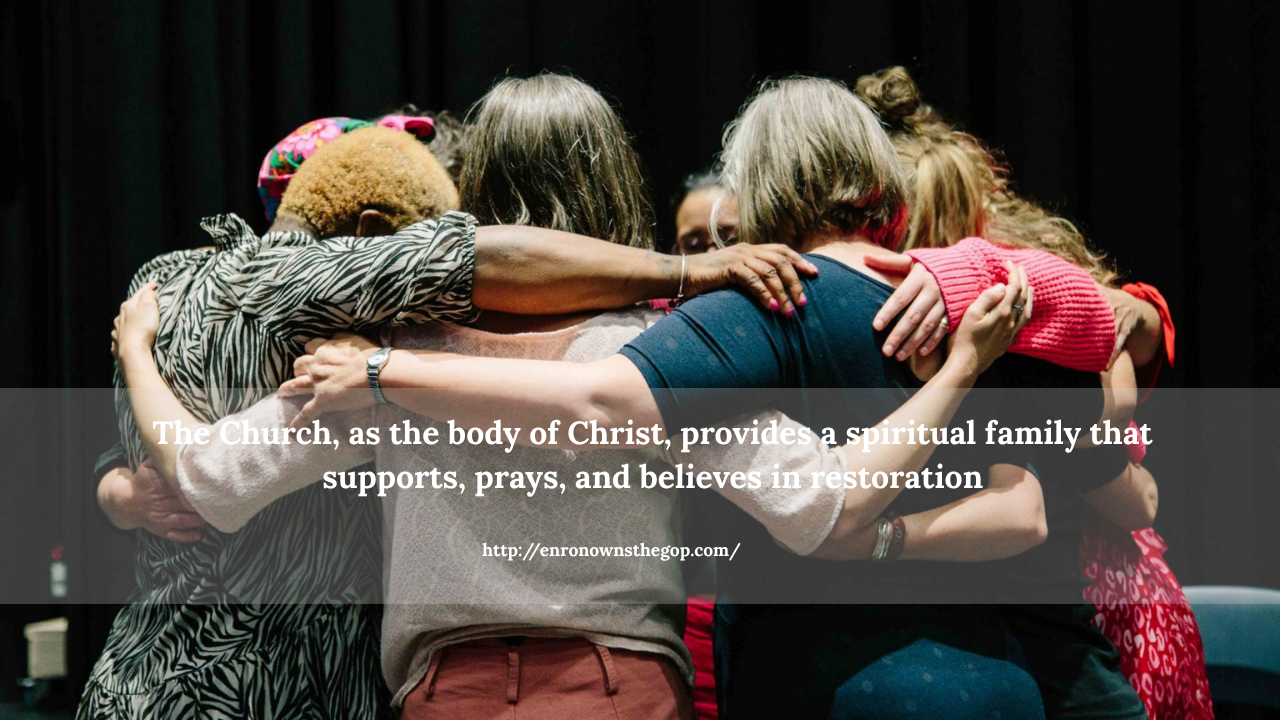
Addiction isolates, but recovery flourishes in community. The Church, as the body of Christ, provides a spiritual family that supports, prays, and believes in restoration. Through mentoring, small groups, counseling, and pastoral care, churches can be places where lives are rebuilt and hearts are healed.
Ultimately, the Church is not a museum for the perfect but a hospital for the broken. By offering grace over shame, presence over judgment, and hope over despair, the Church becomes a powerful force in healing the wounds of addiction and helping people rise—again and again—into the fullness of life God has for them.